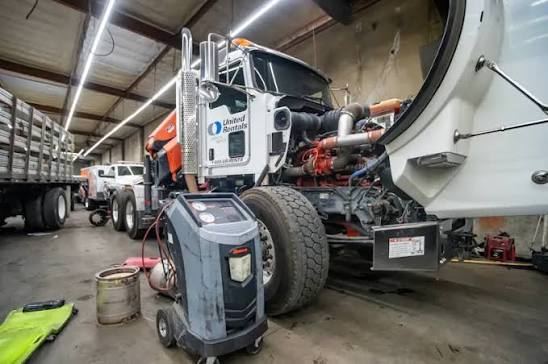
Transmission issues can affect your fleet operations by increasing downtime and repair costs. They can cause delayed deliveries and increased costs. An understanding of Common Transmission Problems in Heavy Trucks can help you minimize expenses while keeping your trucks on the roads longer.
So, what are some of the more common heavy truck transmission issues that you should know about? The following guide introduces you to the problems you are more likely to face.
1. Slipping Gears
If the engine’s RPM increases without a corresponding increase in the truck’s speed, it indicates slipping gears. Additional signs include delayed acceleration and inability to maintain speed.
Some of the common underlying causes can include:
- Worn clutch plates
- Low transmission fluid
- Damaged torque converter
It is recommended to check the transmission fluid level, clutch plates, or perform diagnostic checks to identify any internal problems.
2. Transmission Fluid Leaks
If you notice stains or puddles of red fluid under the truck, it may indicate a transmission fluid leak. Damage to the following components often causes this leak:
- Gaskets
- Seals
- Transmission pan bolts
Low transmission fluid levels can cause various issues. This can include overheating or damage to interior components. Timely inspections and a fixed preventive maintenance schedule can help detect damaged gaskets, bolts, and seals in time while ensuring fluid levels are always well maintained.
3. Unpredictable Shifting
Unpredictable gear shifts can be caused by factors such as faulty solenoids, sensors, and ECUs. Sometimes, shift problems appear after the transmission warms up. It is often caused by the deterioration of transmission oil quality. This can cause the elimination of the protective layer provided by the oil or reduced tolerances due to heat-based expansion.
4. Delayed Gear Shift
If your truck’s gears experience consistent delays in shifting, the underlying reasons can include worn solenoids, low transmission fluid, or issues with hydraulic pressure, valve body, clutch, or control module. This problem can appear in the form of significant delay between gear changes or a shock when the gear changes.
It can make the driving experience jerky and increase the chances of damage to the transmission. A meticulous diagnosis by mechanics is required to determine the key problem.
5. Excessive Heat Production
A sudden increase in the transmission fluid’s temperature, a burning odor, and transmission warning lights are common signs of excessive transmission heating. Your truck’s transmission may be overheating when operating in harsh conditions or when towing high loads.
It is recommended to check the level and quality of the transmission fluid if the system is overheating. Also check the cooling system and the transmission cooler. Sometimes, additional cooling systems may solve the problem because the problem is arising due to routine exposure to heavy loads.
6. Strange Noises
If your truck’s transmission starts emitting strange noises such as whining, clunking, or grinding, it is a sign of an issue. Different sounds can indicate different underlying problems:
- Whining can mean the system has worn bearings or a fluid issue.
- Clunking can be a sign of an issue with the universal joint or a driveline.
- Grinding noises may indicate worn clutch parts or synchronizers.
If you experience one of these problems with the transmission, it is recommended to have the system thoroughly inspected. If any damaged or worn components are found, you should get them replaced.
Some of the other common heavy truck transmission issues include error codes, a lack of response, vibration, stuck gears, and torque converter problems. Transmission problems, without concern how minor they may seem, should be diagnosed by an experienced mechanic. A preventive maintenance schedule can help ensure such issues are detected and fixed in time.